What are you looking for?
Search
Watch Size Guide: How to Choose the Perfect Fit for Your Wrist
Watch Size Guide: How to Choose the Perfect Fit for Your Wrist
Introduction
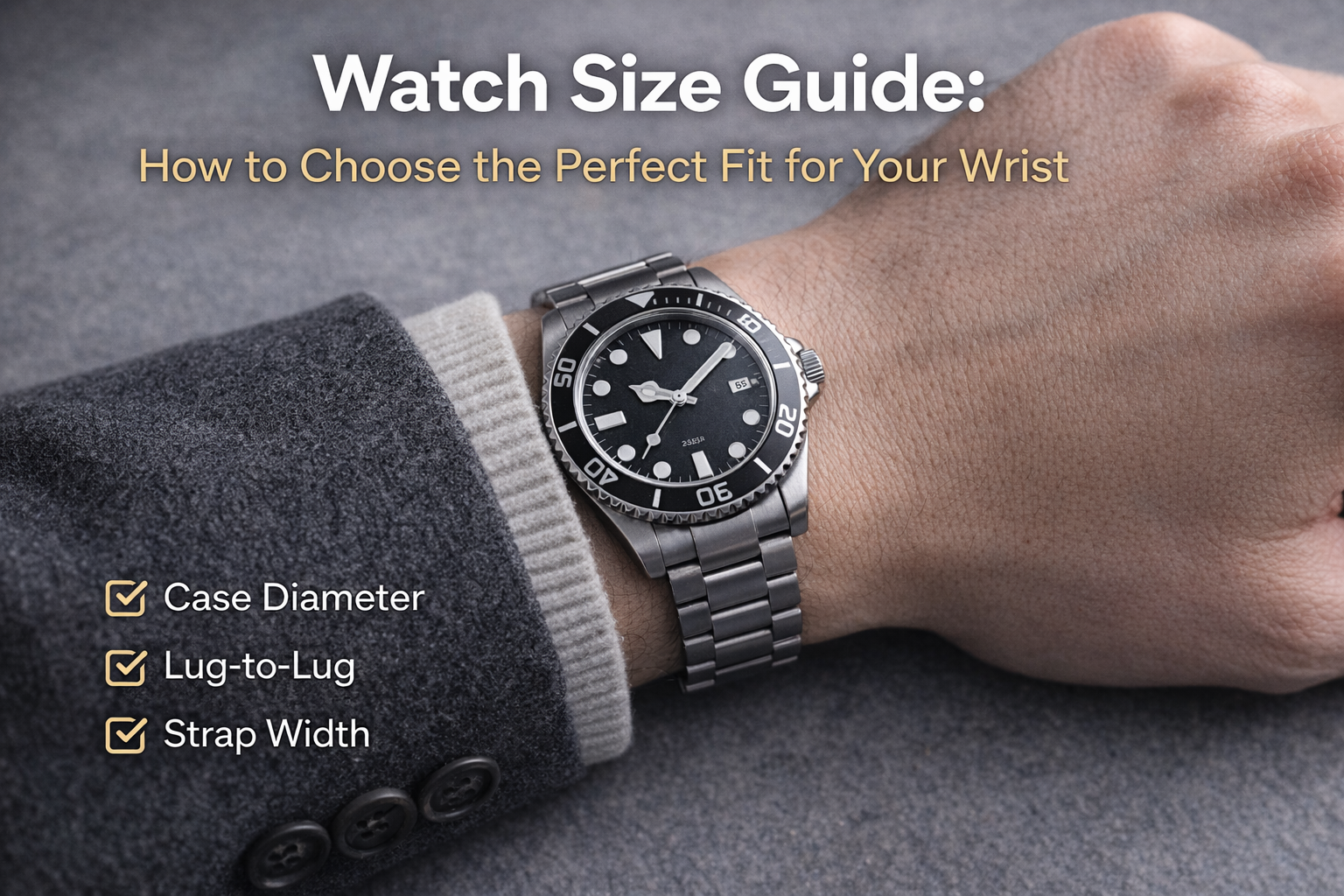
A watch can look amazing in photos—but feel awkward on your wrist if the sizing is off. The good news: choosing the right watch size isn’t about “small vs big.” It’s about proportion—case diameter, lug-to-lug length, thickness, and strap width working together.
This guide gives you a simple, practical way to find the best fit for your wrist—whether you prefer a classic dress look or a modern sporty style.
1) Measure Your Wrist (The Only Number You Really Need)
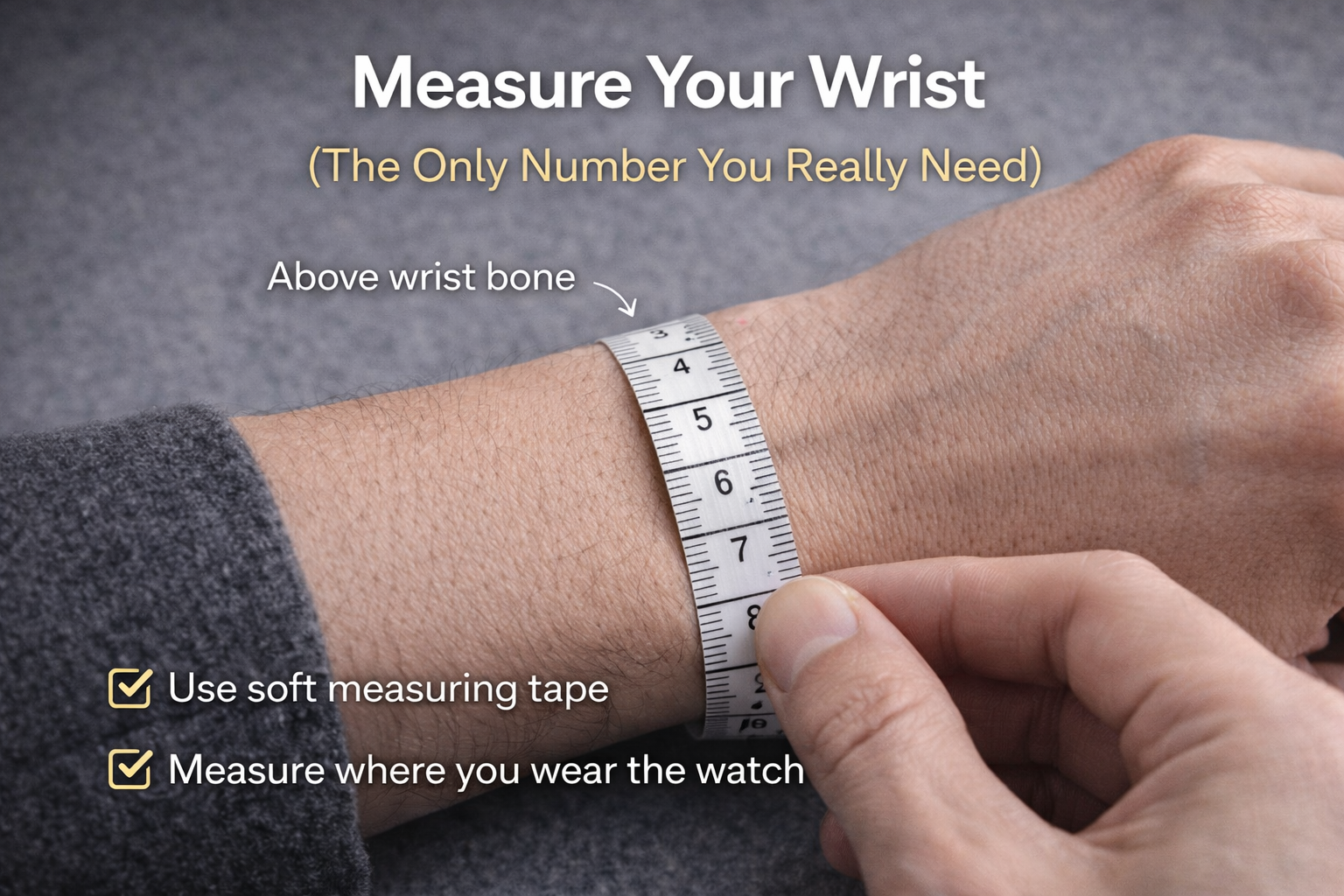
Before you compare watch sizes, measure your wrist circumference:
-
Use a soft measuring tape, or wrap a string around your wrist and measure the length.
-
Measure where you actually wear the watch (usually just above the wrist bone).
Wrist size categories (quick reference):
-
Small: under 6.25 in / 15.9 cm
-
Medium: 6.25–7.25 in / 15.9–18.4 cm
-
Large: over 7.25 in / 18.4 cm
Tip: If your wrist is between sizes, focus more on lug-to-lug than case diameter.
2) Case Diameter: The Number Everyone Talks About
Case diameter is the most visible number (e.g., 36mm, 40mm, 42mm). But it’s not the whole story.
General diameter suggestions (not strict rules):
-
Small wrists: 34–38mm
-
Medium wrists: 38–41mm
-
Large wrists: 41–44mm
However, two watches with the same diameter can wear completely differently depending on lug-to-lug and thickness.
3) Lug-to-Lug: The Real Fit Test
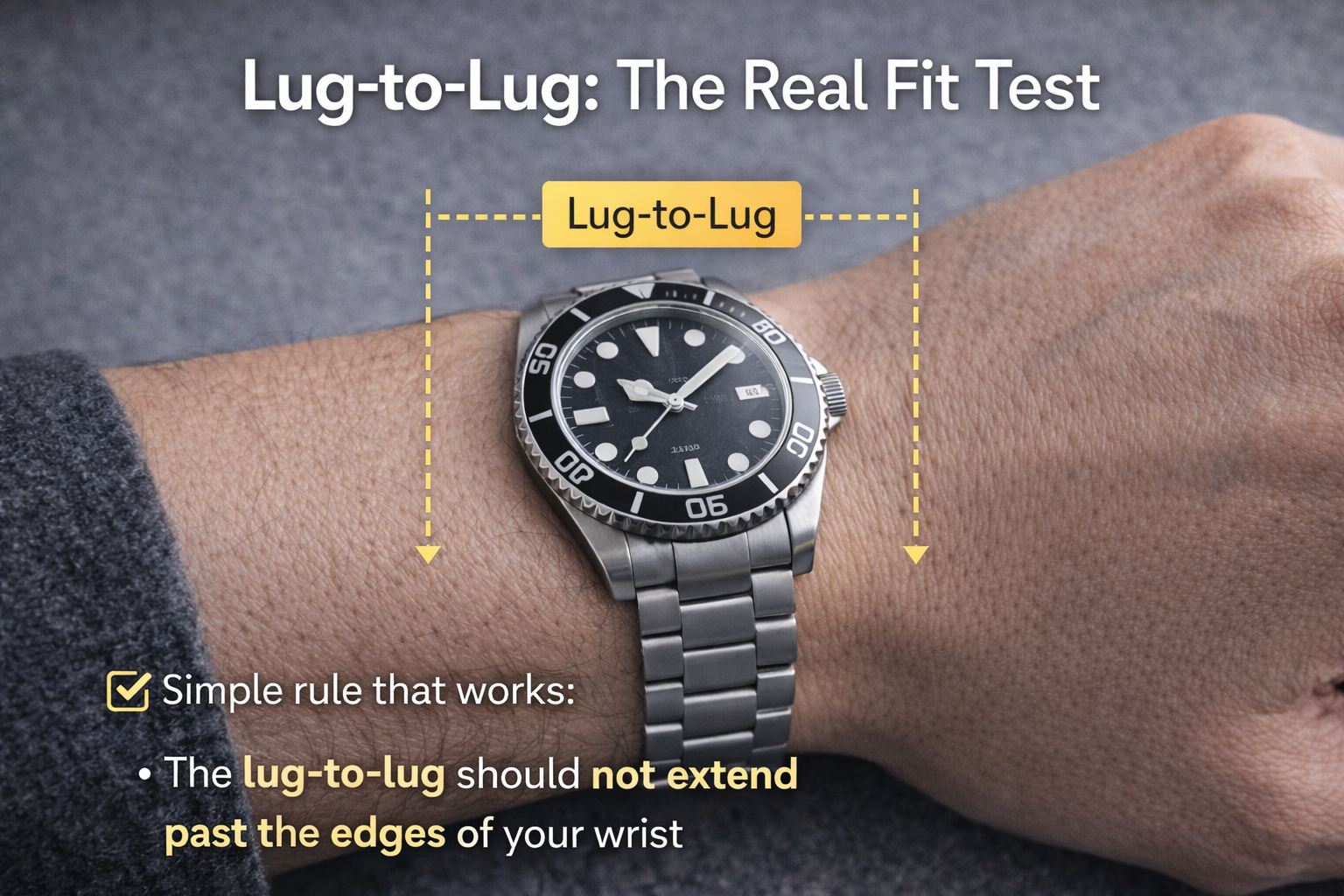
Lug-to-lug is the distance from the top lug tip to the bottom lug tip. This is what determines whether a watch “overhangs” your wrist.
Simple rule that works:
-
The lug-to-lug should not extend past the edges of your wrist.
If you only track one measurement besides diameter, track this one.
4) Case Thickness: Why Some Watches Feel “Top-Heavy”
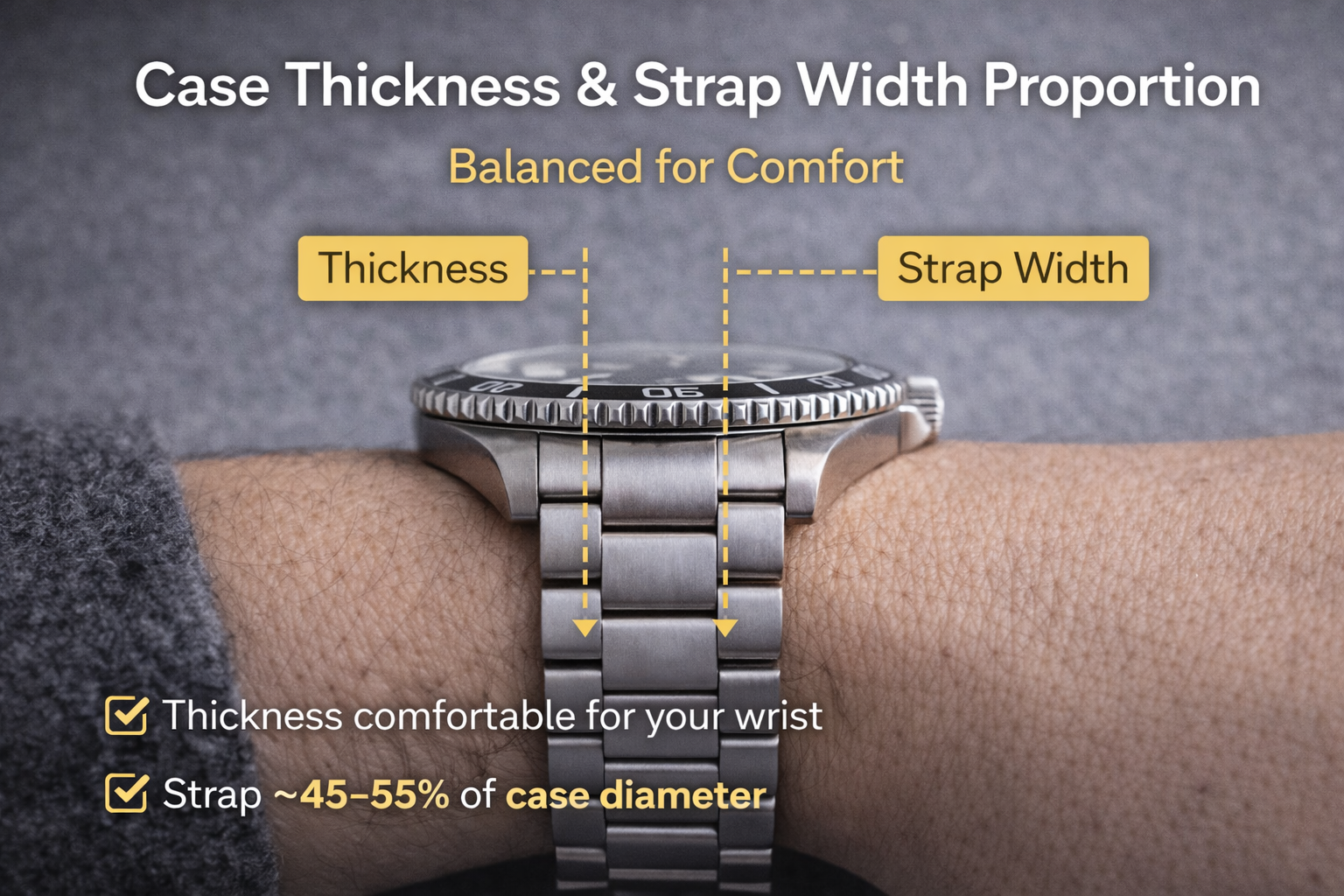
Thickness changes comfort, balance, and how a watch fits under sleeves.
Practical thickness range:
-
Dress / slim profile: 7–10mm
-
Everyday / sport: 10–13mm
-
Chunky / dive style: 13–16mm+
If you dislike heavy or tall watches, aim for a thinner case even if the diameter looks perfect.
5) Strap/Bracelet Width: The Proportion Upgrade
Strap width is usually measured at the lugs (18mm, 20mm, 22mm). Wider straps make a watch look sportier; narrower straps make it look dressier.
Simple proportion guideline:
-
Strap width is often ~45–55% of case diameter
(e.g., 40mm case pairs well with 20mm strap)
Also, bracelets often make watches wear slightly larger than straps.
6) Shape Matters: Round vs Square vs Cushion
Case shape changes how big a watch appears:
-
Square/rectangular watches wear larger than their stated width
-
Cushion cases often look bigger due to surface area
-
Thin bezels make the dial look larger (appear bigger)
-
Thick bezels (dive watches) can make the watch wear smaller than expected
7) Easy Sizing Table (Fast Recommendations)
Use this table to get close quickly (then confirm lug-to-lug):
-
Wrist under 6.25 in (15.9 cm): 34–38mm, lug-to-lug under ~46mm
-
Wrist 6.25–7.25 in (15.9–18.4 cm): 38–41mm, lug-to-lug under ~50mm
-
Wrist over 7.25 in (18.4 cm): 41–44mm, lug-to-lug under ~54mm
These are common comfort zones, not strict limits.
8) Styling Tips: How to Choose the Look You Want
Fit is comfort + aesthetics:
-
Want a classic vintage look? Go a bit smaller and thinner (36–38mm).
-
Want a modern everyday look? 39–41mm is the safest zone for most people.
-
Want a sporty statement? Larger diameter + thicker case + bracelet.
If you’re choosing a watch for daily use and want a simple “do-it-all” checklist, use: How to Choose the Right Watch for Everyday Wear.
9) Common Mistakes (Avoid These)
-
Only looking at diameter
Lug-to-lug is what prevents overhang. -
Ignoring thickness
A 40mm watch can feel huge if it’s very thick. -
Buying based on photos alone
Camera angles and wrist shots can mislead. -
Forgetting strap impact
Bracelets usually wear larger; slim leather straps wear smaller.
If you’re comparing watch types (and how they feel on the wrist long-term), this helps: Mechanical vs Quartz Watches: Key Differences Explained.
10) Comfort Matters: Size Should Match Lifestyle
If you wear long sleeves often, a thinner watch is usually more comfortable. If you’re active, a slightly larger watch can be easier to read quickly.
And if you want better long-term wear experience (accuracy + stability), you may also like: Watch Accuracy: What’s Normal and How to Improve It.
FAQ
Q1: What watch size is best for a 6.5-inch wrist?
Most people with a 6.5-inch wrist find 38–41mm comfortable, depending on lug-to-lug and thickness.
Q2: Is a 42mm watch too big?
Not necessarily. It depends on lug-to-lug length, thickness, bezel design, and your wrist width.
Q3: Why does a 40mm watch sometimes look bigger than another 40mm?
Lug-to-lug, thickness, bezel width, and case shape can make the same diameter wear larger or smaller.
Q4: Does bracelet vs strap change sizing?
Yes. Bracelets often make watches feel larger and heavier; straps can make the watch wear slimmer.
Q5: What matters more: diameter or lug-to-lug?
For fit and overhang, lug-to-lug matters more. Diameter matters more for overall style.