What are you looking for?
Search
Watch Water Resistance Explained: What 30m, 50m, 100m Really Mean
Introduction: Why “30m” Doesn’t Mean 30 Meters
If you’ve ever bought a watch and seen “30m,” “50m,” or “100m” on the dial or caseback, you’re not alone in feeling confused. The biggest misconception is thinking those numbers describe real underwater depth you can safely reach.
In reality, water resistance is tested under controlled lab pressure—not real-world conditions like arm movement, temperature changes, steam, soap, or waves. That’s why a “30m” watch may survive a splash, but fail in a hot shower.
This guide breaks down what each rating truly means, what activities are safe, and how to protect your watch for years.
How Water Resistance Is Tested (And Why Real Life Is Different)
Most water resistance tests apply static pressure in a lab. But real life adds variables that increase risk:
-
Arm movement creates pressure spikes when swimming
-
Hot water and steam can change seal tension
-
Soap and shampoo can degrade gaskets over time
-
Aging gaskets lose elasticity year by year
-
Crown position matters more than most people realize
If you’re also trying to build a daily-wear setup that stays consistent over time (including real-world durability and timing stability), you may like this related guide: Watch Accuracy: What’s Normal and How to Improve It.
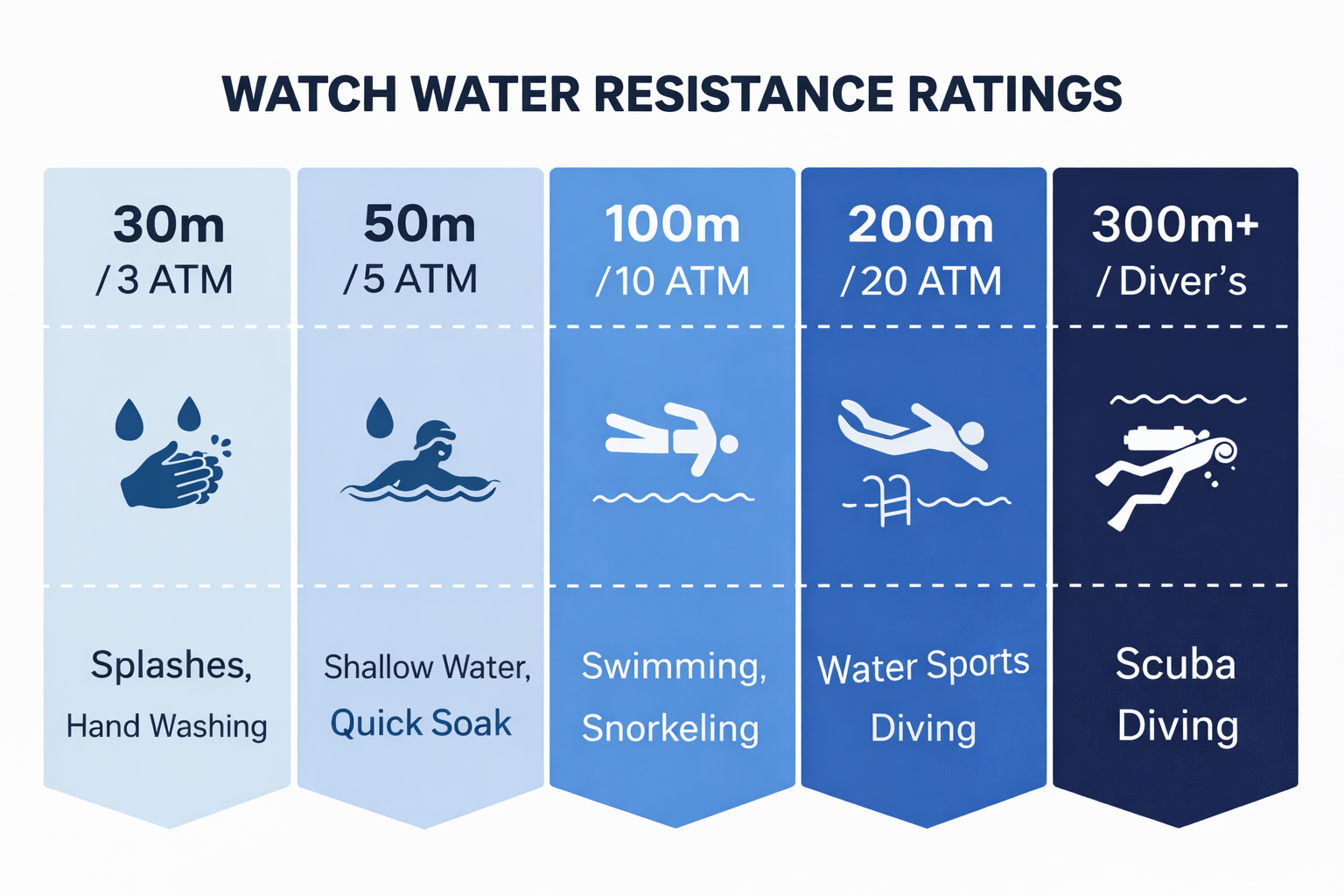
Quick Guide: What Each Water Resistance Rating Really Allows
30m / 3 ATM
Safe for: light splashes, hand washing, rain
Not safe for: showering, swimming, dishwashing in hot water, water sports
Even shallow swimming can create more dynamic pressure than the test rating suggests.
50m / 5 ATM
Safe for: splashes, rain, occasional shallow water exposure, quick cold-water rinse
Usually not recommended for: swimming laps, surfing, hot showers
50m can handle more than 30m, but it’s still not designed for sustained water activity.
100m / 10 ATM
Safe for: swimming, snorkeling (surface), pool activities
Avoid: high-impact water sports unless the watch is built for it
This is the “vacation-proof” category for most people.
200m / 20 ATM
Safe for: swimming, snorkeling, recreational diving (in many cases), water sports
Best for: people who are frequently around water
Most true “sport” watches start to feel genuinely reliable here—especially with a screw-down crown.
300m+ (Diver’s Watches)
Safe for: serious water exposure, demanding conditions, diving (depending on ISO rating)
If you dive often, look for ISO 6425 compliance (more on that below).
The Crown Matters More Than the Number
The crown is one of the most common water entry points.
Push-Pull Crown
Common on dress watches and many everyday watches. It can still be water resistant, but it’s easier to accidentally leave slightly open.
Screw-Down Crown
A screw-down crown compresses gaskets more securely and reduces user error. It’s not “magic,” but it’s a major upgrade for water reliability.
Tip: If your watch has a screw-down crown, tighten it before water exposure—snug, not overly forced.
“Water Resistant” vs “Waterproof”
You’ll see “water resistant” on nearly all modern watches because “waterproof” is a misleading absolute. Seals age, crowns get bumped, and service intervals matter.
So if a brand uses “waterproof,” treat it as marketing language—not a lifetime promise.
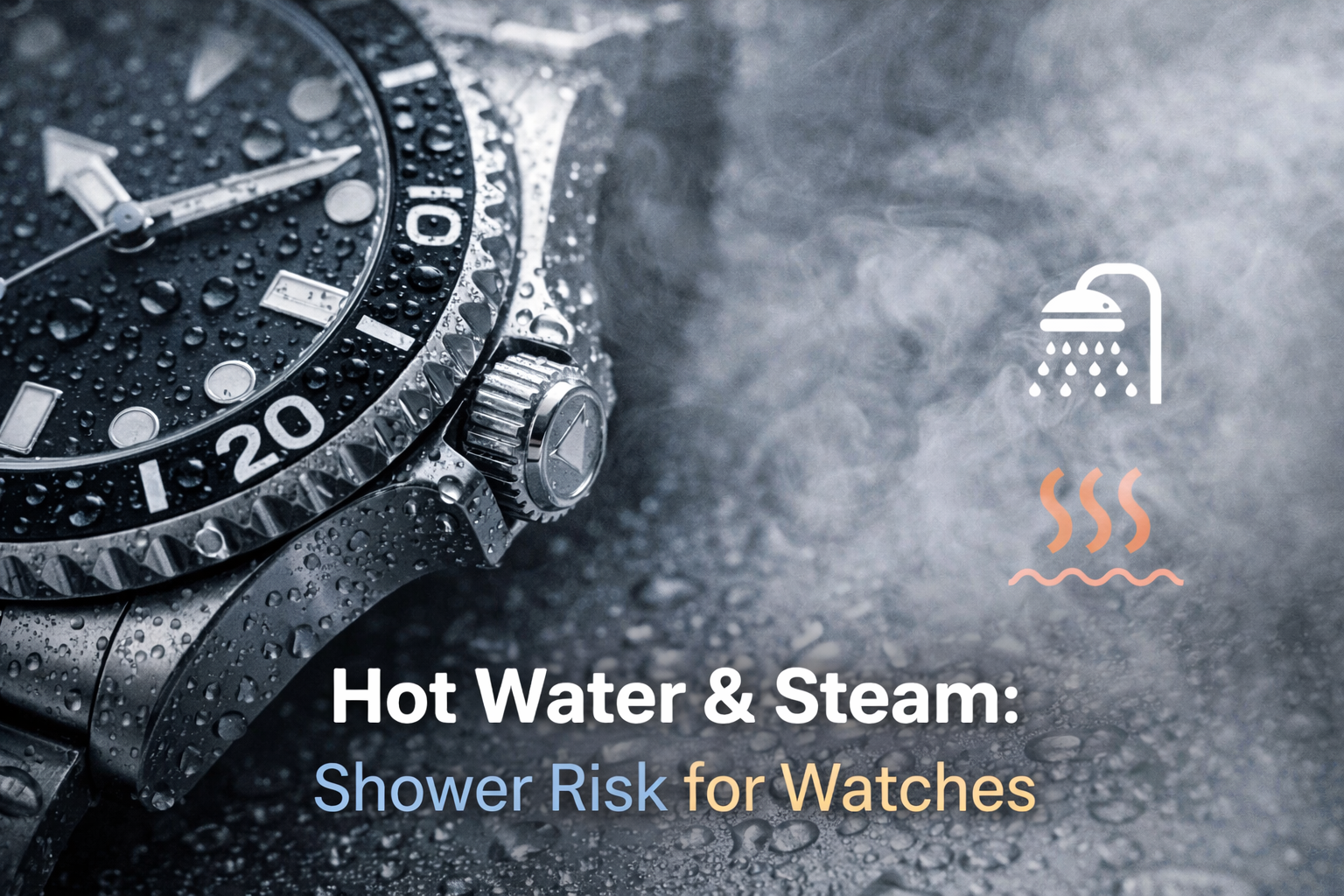
The Shower Myth: Why Hot Water Is a Risk
Many people assume showering is safe because it’s shallow water. But showers create a perfect storm:
-
Heat expands metal and changes seal tension
-
Steam can seep in more easily than liquid water
-
Soap reduces surface tension and can bypass seals
-
Shower jets can create surprising pressure
Even a 100m watch can fog after repeated hot showers over time—especially if it hasn’t been pressure-tested recently.
Best practice: take your watch off before hot showers, saunas, steam rooms, or hot tubs.
Common Mistakes That Cause Water Damage
Avoid these and your watch will last much longer:
-
Using the crown underwater
Setting time/date while wet is one of the fastest ways to let moisture in. -
Pressing chronograph buttons underwater (unless designed for it)
Many chrono pushers aren’t meant to be used in water. -
Assuming old ratings still apply
A “100m” watch from years ago may not be 100m anymore if seals are aged. -
Skipping maintenance and pressure tests
Water resistance is not permanent.
How Often Should You Pressure-Test a Watch?
If water exposure is part of your lifestyle:
-
Once a year if you swim regularly
-
Before a beach vacation if the watch is going in water
-
After any case opening (battery change, service, repair)
If you’re deciding what kind of movement suits your lifestyle (and how much upkeep you’ll deal with long-term), read: Mechanical vs Quartz Watches: Key Differences Explained.
ISO 6425: What Makes a True Diver’s Watch?
A watch marketed as a “diver” isn’t always a true dive watch. ISO 6425 is a standard that typically includes:
-
minimum water resistance
-
condensation test
-
shock resistance
-
corrosion resistance
-
legibility requirements
-
timing feature (often a bezel)
If you need a watch for actual diving, ISO compliance is a strong signal.
Practical Recommendations (Fast Decision Guide)
If you want one simple rule set:
-
Desk life / daily wear: 30m is fine if you avoid showers
-
Everyday + travel: 50m is comfortable for most people
-
Swimming: choose 100m minimum
-
Water sports / frequent water use: 200m + screw-down crown
-
Diving: look for ISO diver specs
If you’re still choosing a watch that fits your routine (work, travel, casual wear) and want a simple checklist, this guide helps: How to Choose the Right Watch for Everyday Wear.
FAQ
Can I swim with a 50m water resistant watch?
Most brands don’t recommend regular swimming with 50m unless it’s a sporty model with a well-sealed crown. For consistent swimming, 100m is the safer choice.
Is it okay to shower with a water resistant watch?
Not recommended. Hot water, steam, and soap can weaken seals and increase moisture risk—even on higher ratings.
What does 3 ATM mean on a watch?
3 ATM is roughly equivalent to 30m, intended for splashes and rain—not swimming or showers.
Do I need a screw-down crown for swimming?
Not always, but it greatly reduces user error and improves reliability—especially for 100m+ watches.
How do I know if my watch has water damage?
Signs include fog under the crystal, condensation, corrosion, or erratic behavior. If you see fog, stop using it and get it checked immediately.