What are you looking for?
Search
How to Clean a Watch Safely: Bracelet, Case, and Crystal (At Home Guide)
How to Clean a Watch Safely: Bracelet, Case, and Crystal (At Home Guide)
Introduction
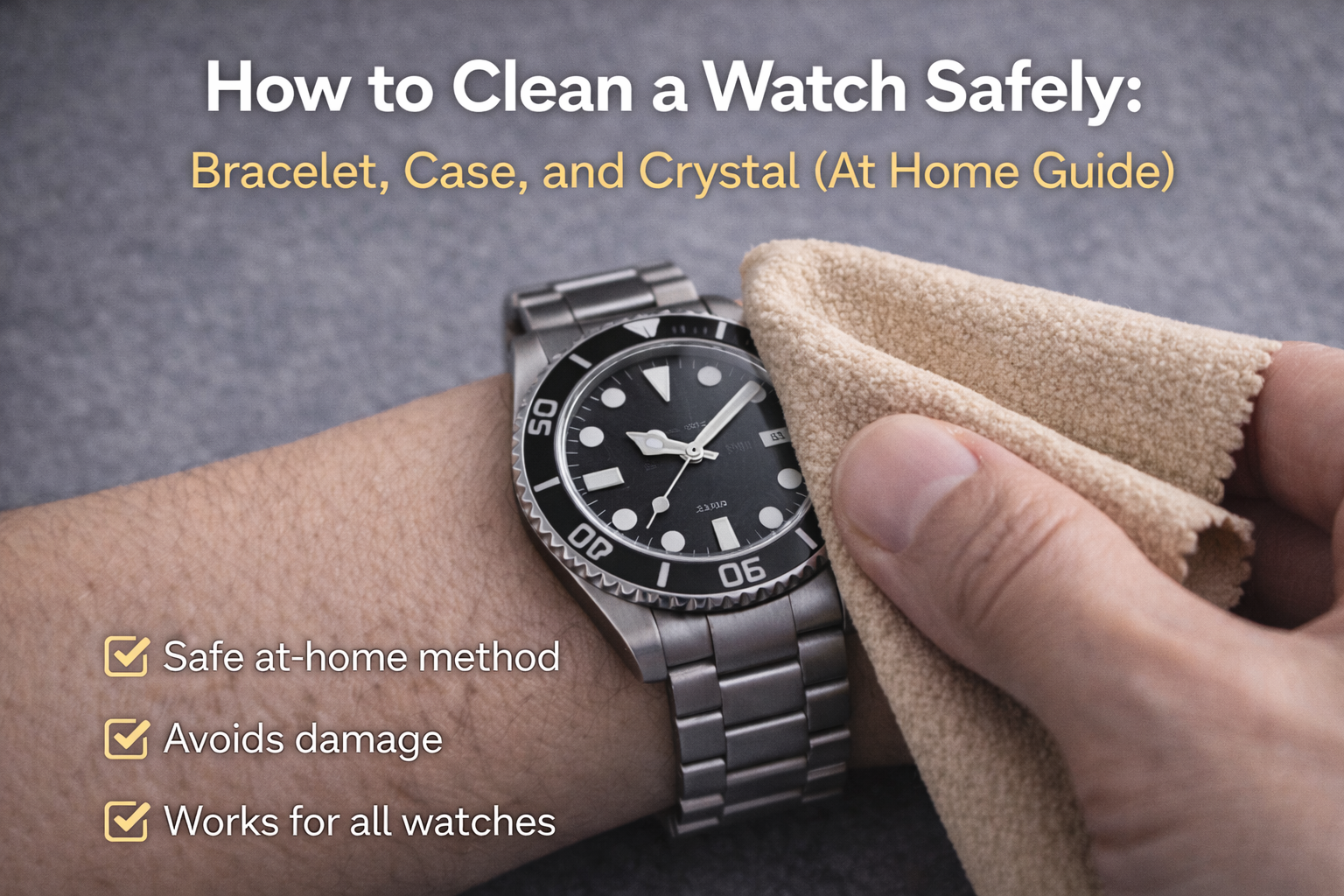
Watches collect more than dust. Sweat, skin oils, sunscreen, and everyday grime slowly build up—especially in bracelet links and around the caseback. The problem is that many “quick cleaning hacks” can cause real damage: moisture intrusion, scratched coatings, or ruined straps.
This guide shows a safe, at-home method to clean your watch properly—without special tools—and explains what to do differently for metal bracelets, leather straps, and water resistance levels.
What You’ll Need (Simple Home Kit)
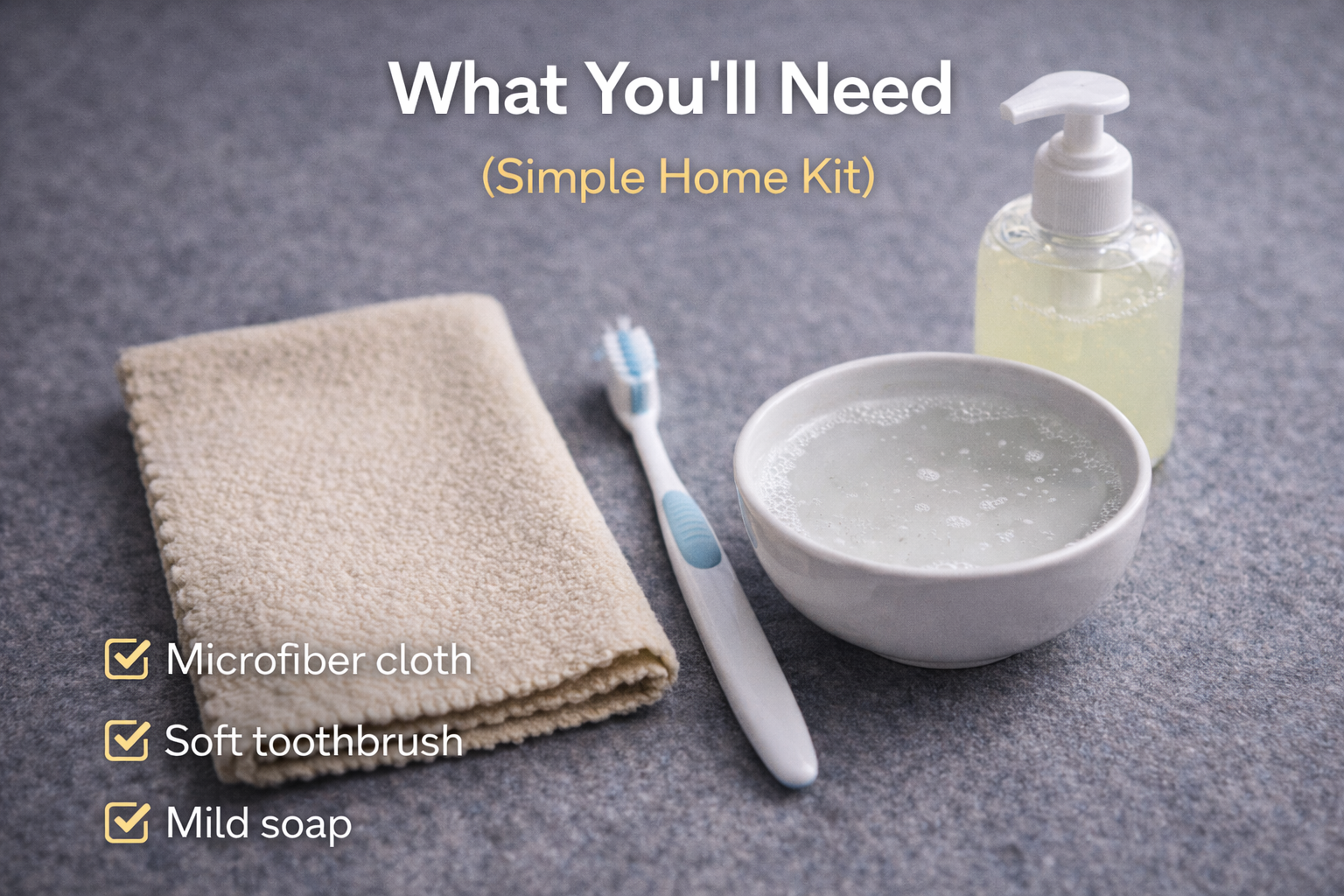
You don’t need fancy tools. Most people already have these:
-
A soft microfiber cloth
-
A soft toothbrush (new or dedicated to cleaning)
-
Mild soap (no harsh chemicals)
-
A small bowl of lukewarm water
-
Cotton swabs (optional)
-
A soft towel for drying
Optional but helpful:
-
A small blower (or gentle air puff)
-
A soft detailing brush
Step 1: Check Water Resistance Before You Do Anything
Before cleaning, you need to know whether your watch can safely contact water.
-
If your watch is 30m / 3 ATM, treat it as “splash only.”
-
If it’s 100m+ and the crown is properly secured, you can usually do a gentle rinse—depending on age and seal condition.
-
Never clean a watch with the crown pulled out.
If you’re unsure what your rating actually allows, use: Watch Water Resistance Explained: What 30m, 50m, 100m Really Mean.
Safe rule: When in doubt, use a damp cloth method (not running water).
Step 2: Basic “No-Risk” Cleaning (Works for Almost Any Watch)
This method avoids soaking and is safe for most watches:
-
Wipe the entire watch with a dry microfiber cloth.
-
Lightly dampen the cloth with lukewarm water.
-
Add a tiny amount of mild soap to the cloth (not directly to the watch).
-
Gently wipe the case, bezel, and bracelet/strap.
-
Use a cotton swab for tight corners (around lugs/crown guards).
-
Dry immediately with a clean towel, then finish with a dry microfiber cloth.
This alone removes most surface grime without risk.
Step 3: Cleaning a Metal Bracelet (The Best Way at Home)
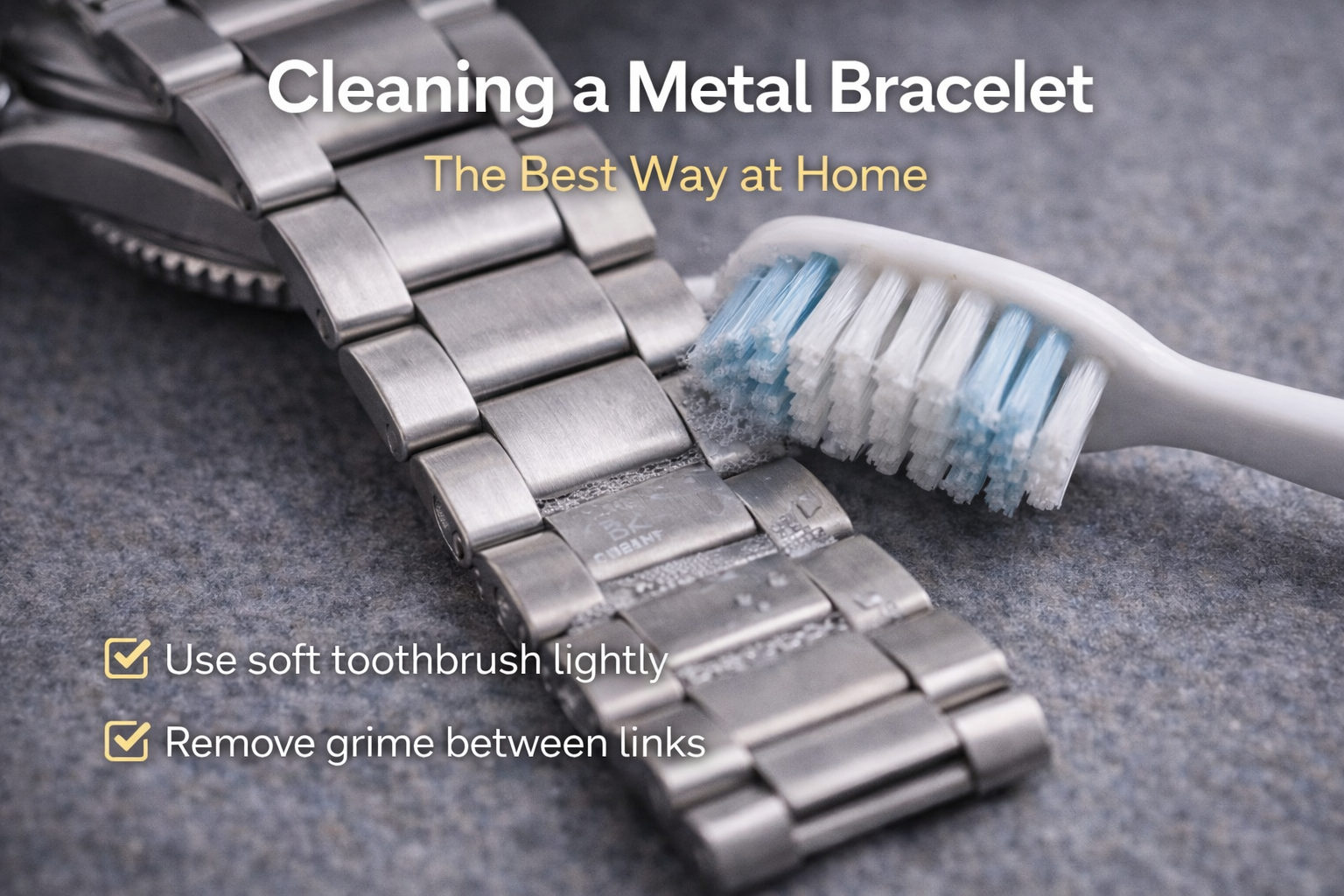
Metal bracelets trap grime between links. If your watch is suitable for gentle water contact:
If you have 100m+ water resistance (and the crown is secured):
-
Mix mild soap into lukewarm water.
-
Dip the toothbrush lightly and scrub the bracelet gently (especially underside).
-
Rinse the bracelet with a very gentle stream of lukewarm water (avoid blasting the crown area).
-
Dry thoroughly—especially between links.
If your watch is 30m–50m (or you’re unsure):
-
Don’t rinse under running water.
-
Use a damp cloth + toothbrush method, then wipe and dry carefully.
Tip: Always dry the bracelet links well. Trapped water can create smell and skin irritation.
Step 4: Cleaning a Leather Strap (Do NOT Do This Like Metal)
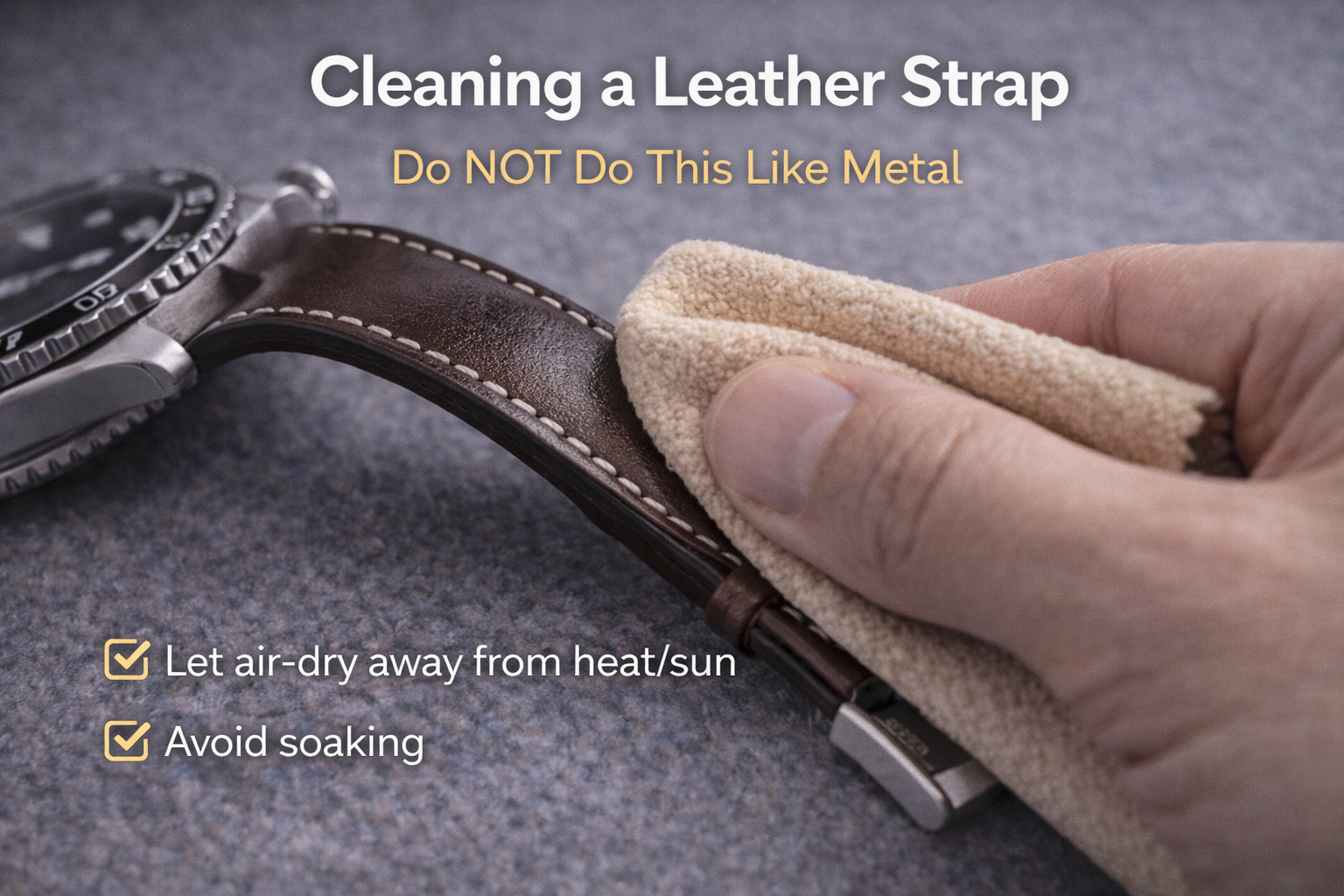
Leather and water don’t mix well. Cleaning leather the wrong way causes cracking, odor, and stiffness.
Safe leather strap routine:
-
Wipe with a slightly damp cloth (almost dry).
-
Use a tiny amount of mild soap only if needed.
-
Dry immediately with a towel.
-
Let it air-dry away from heat/sun.
Avoid:
-
Soaking
-
Hot water
-
Alcohol wipes
-
Hair dryers/heaters
If you wear leather daily, rotating straps can extend lifespan significantly.
Step 5: Crystal Cleaning (Sapphire vs Mineral vs Acrylic)
Your crystal matters because different materials scratch differently.
-
Sapphire: very scratch-resistant, but can still show fingerprints—microfiber works best.
-
Mineral glass: scratches easier—avoid abrasive cloths.
-
Acrylic: scratches easily but is often polishable.
Safe crystal rule: Use microfiber only. If you need more, use a damp microfiber—never rough paper towels.
Step 6: What NOT to Use (Common Mistakes)
These cause most at-home damage:
-
❌ Bleach or harsh cleaners
-
❌ Alcohol sprays directly on the watch
-
❌ Ultrasonic cleaners (unless you know what you’re doing)
-
❌ Abrasive sponges or paper towels
-
❌ Hot water / steam (especially shower cleaning)
-
❌ Cleaning with crown unscrewed/pulled out
And if your watch is near electronics and chargers often, don’t forget magnet risk—accuracy can suffer.
For accuracy expectations and quick fixes, read: Watch Accuracy: What’s Normal and How to Improve It.
How Often Should You Clean Your Watch?
A simple schedule:
-
Quick wipe: 2–3 times per week (microfiber)
-
Deeper clean: every 2–4 weeks (bracelet/crevices)
-
After beach or pool: wipe immediately, rinse only if appropriate, dry fully
Salt and sunscreen residue are especially harsh over time.
Bonus: Storage After Cleaning (Prevents Moisture + Scratches)
Cleaning is only half the story—storage prevents the next layer of grime and avoids scratches.
-
Store watches on soft cushions or separate slots
-
Add silica packs if humidity is high
-
Keep away from magnets/chargers at night
If you want the full storage checklist, use: How to Store Your Watches Properly: Avoid Scratches, Moisture, and Battery Damage.
FAQ
Q1: Can I wash my watch under the tap?
Only if the watch is truly suitable for water contact (commonly 100m+) and the crown is secured—and even then, use gentle water pressure.
Q2: Can I use alcohol wipes on a watch?
Not recommended. Alcohol can damage seals, coatings, and especially leather straps.
Q3: How do I remove grime between bracelet links?
Use a soft toothbrush with mild soap and lukewarm water, then dry thoroughly between links.
Q4: Why does my watch smell after cleaning?
Moisture trapped between bracelet links or inside straps can cause odor. Dry more thoroughly and let it air out.
Q5: Should I use an ultrasonic cleaner?
Generally avoid it unless you understand the risks. It can loosen components, damage finishes, or stress seals.